
Nº 006 · Sep 18, 2026
The Potter Who Beat the Wheel With a Notebook
Smallpox took the potter's wheel from Josiah Wedgwood — so he mastered clay with a notebook instead.
Listen to this story
The boy who couldn't throw
Josiah Wedgwood was born in 1730 into a Staffordshire family that had made pots for generations. As a boy he caught smallpox, and the infection settled in his right knee. The knee never fully healed — the leg was eventually amputated — and it meant he could not do the most basic work of a potter: kicking the wheel and throwing clay.
At fourteen he was formally apprenticed to his eldest brother Thomas, who had taken over the family works. Unable to throw, Josiah did the other work instead: he kept records, modeled, designed, and ran experiments. His brother thought the ideas unnecessary and refused him a partnership. So Josiah left.
Five thousand trials
In 1759 he opened his own pottery at Burslem and began the work that made his name: an organized assault on guesswork. He kept an Experiment Book and logged everything — clay mixes, glazes, firing temperatures. Across his career he recorded more than five thousand trials.
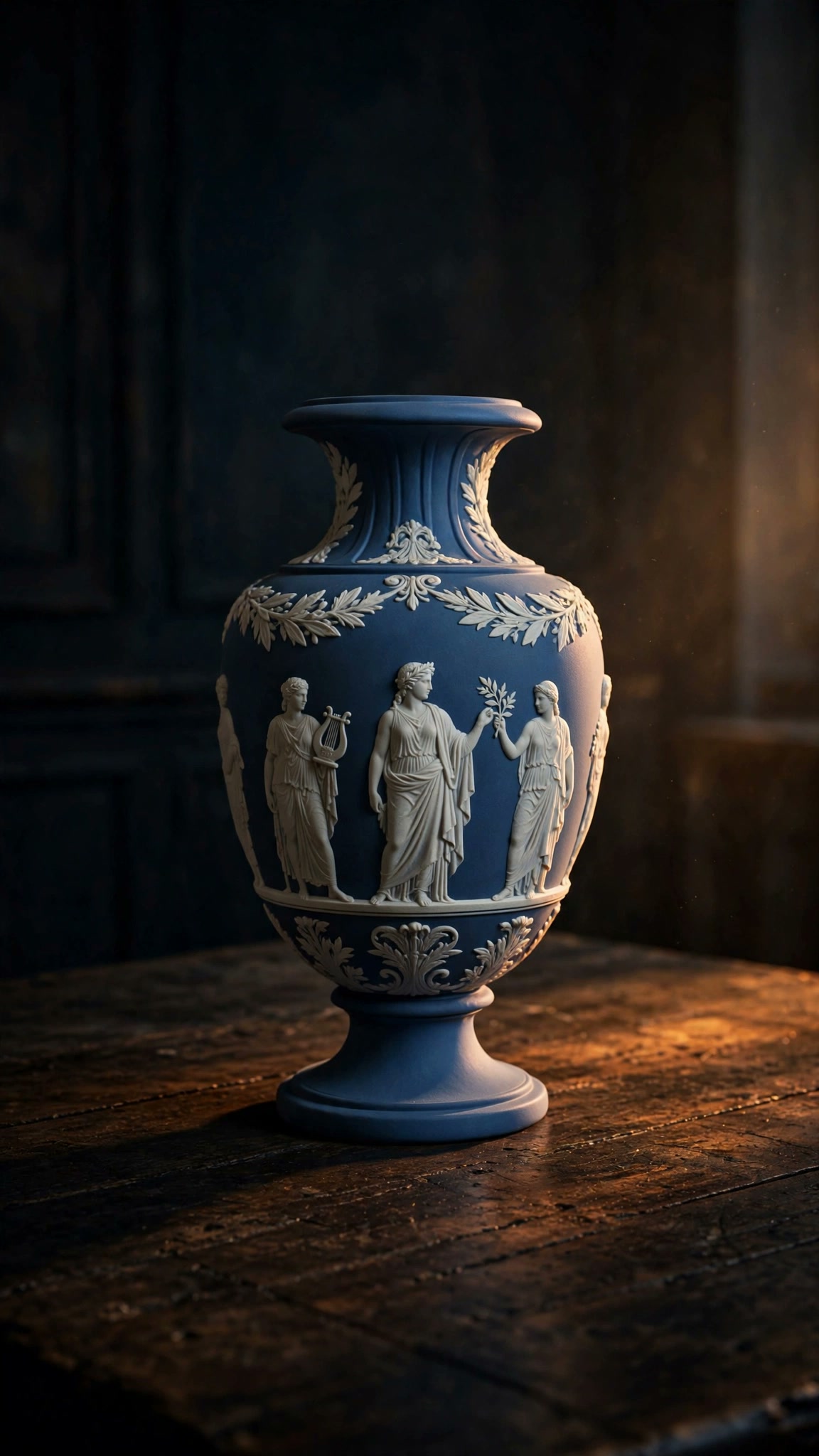
The method paid off fast. His creamware caught the eye of Queen Charlotte, who let him call it Queen's Ware and made him her official potter. Then, after years of mineral-oxide experiments, he perfected jasperware in 1775 — the unglazed stoneware in that famous blue, decorated with white raised figures. The company he built is still a name on tables around the world.
Mastery from the other side
Wedgwood never got his knee back, and he never needed it back. The injury that barred him from the wheel pushed him into the notebooks — and the notebooks turned out to be the deeper craft. While other potters worked by feel, he worked by evidence.
Mastery isn't always holding the tool. Sometimes it's studying the craft until it can't hide from you.
Reel script
As a boy, smallpox crippled Josiah Wedgwood's knee — and stole the potter's wheel from him.
He couldn't throw clay, so he attacked the craft from the other side: he wrote everything down. Thousands of experiments — clays, glazes, kiln heat — every one logged in his notebooks.
In 1759 he opened his own pottery. The queen herself let him name his creamware Queen's Ware. Then came the blue-and-white jasperware — perfected in 1775, still famous today.
Mastery isn't holding the tool. It's studying the craft until it can't hide from you.
The lesson
Losing the tool can teach you the craft.
What it teaches
Mastery isn't always holding the tool. Sometimes the deepest craft comes from studying the thing until it can't hide from you.
How to use it
- Pick one skill you feel clumsy at and study it for a week — notes, questions, patterns — instead of just doing it.
- Log your next twenty attempts at anything: what you tried, what changed, what failed. Evidence beats feel.