
Nº 005 · Sep 17, 2026
He Traded His Goal for His Men
Shackleton never crossed Antarctica. When the ice took his ship, he traded his public goal for a private one — and kept it.
Listen to this story
The crossing that died with the ship
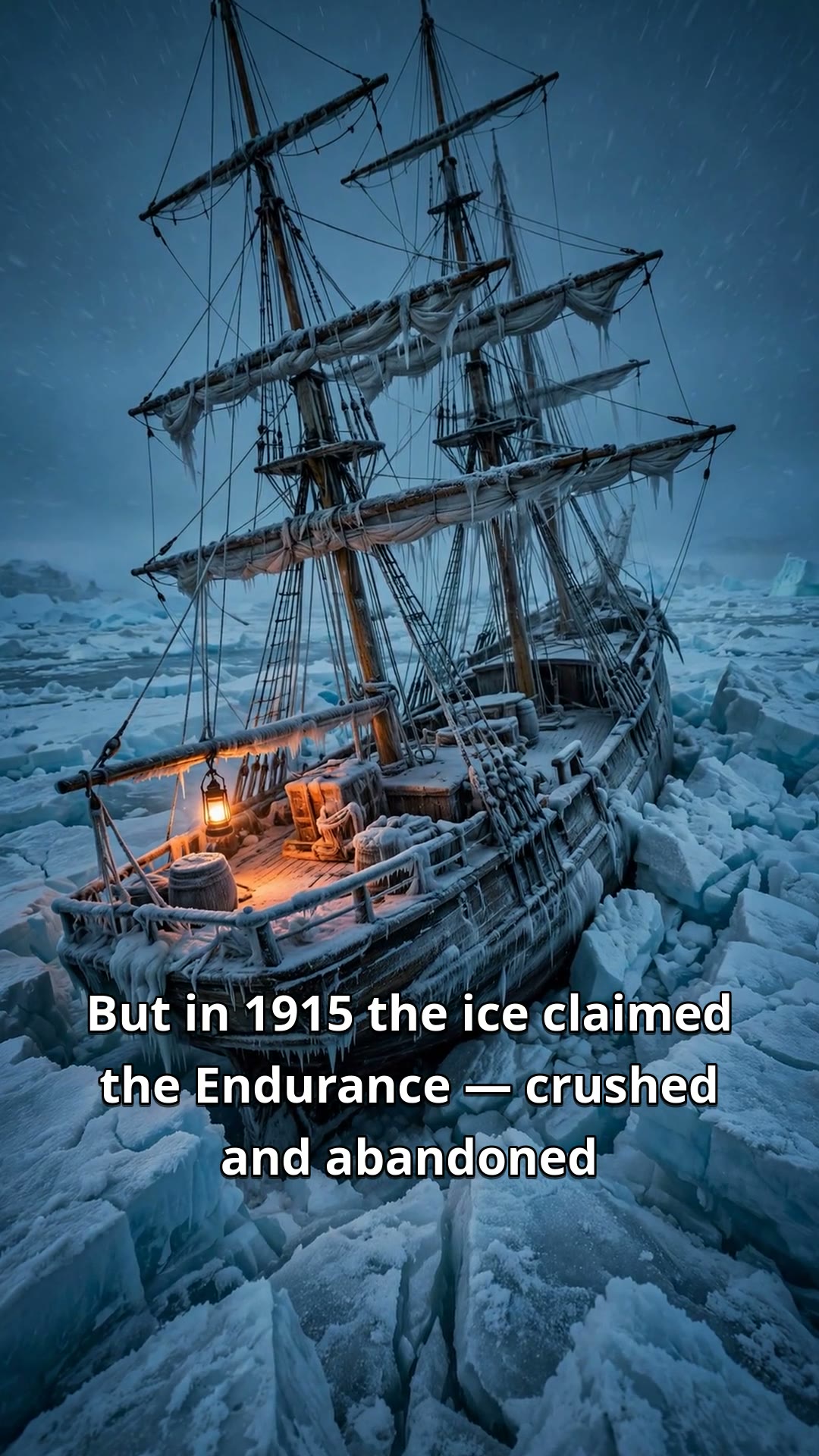
The Imperial Trans-Antarctic Expedition set out to do what no one had done: cross Antarctica on foot, coast to coast. It was the public goal — the reason the money was raised, the reason the ship sailed. Then, in early 1915, pack ice closed around the Endurance and would not let go. On October 27, the crew abandoned the crushed ship. The ship went down on November 21, and the expedition's famous goal went down with it.
Shackleton did not announce a new public goal. He set a private one instead: bring every man home. Twenty-eight men stood on the ice with no ship left.
Eight hundred miles in an open boat
With five companions, Shackleton took the small lifeboat James Caird and aimed it at South Georgia, about eight hundred miles away across open ocean. They launched on April 24, 1916, and landed on May 10 — about sixteen days at sea in a boat meant for a ship's deck, not the open ocean.
He made it to South Georgia, then went back for the twenty-two men waiting on Elephant Island.
Everyone came home
On August 30, 1916, the Chilean vessel Yelcho reached them. Every one of the twenty-eight men of the Endurance party survived. (A note on scope: the Ross Sea party, a separate arm of the expedition, lost three men — this story is about the Endurance crew.)
Shackleton is remembered not for the crossing he promised, but for the promise he kept. When the goal you announced dies, set one you can finish. Greatness isn't the goal you announce — it's the one you finish.
Reel script
Cross Antarctica on foot — a first. That was Shackleton's plan in 1914. But in 1915 the ice claimed the Endurance — crushed and abandoned on October 27, sank on November 21. His goal sank with the ship.
So he set a new goal: every man comes home. He aimed the lifeboat James Caird at South Georgia — eight hundred miles of open ocean. Launched April 24, 1916; landfall May 10 — sixteen days at sea.
Then he went back. On August 30, 1916, the Yelcho reached the twenty-two men waiting on Elephant Island. All twenty-eight survived.
Greatness isn't the goal you announce. It's the one you finish.
The lesson
A dead goal can reveal the mission that matters.
What it teaches
When the goal you announced dies, set one you can finish. Greatness isn't the goal you announce — it's the one you finish.
How to use it
- Name the mission under your public goal — the part worth saving if the goal dies.
- When a plan collapses, write one smaller promise you can still keep.
- Trade the announced goal for a finishable one instead of quitting.